
7 Mistakes You're Making When You Clean Your Chandelier (and How to Fix Them)

A chandelier can transform a room with brilliance, scale and elegance. Over time, however, dust, fingerprints, cooking residue and airborne pollutants can dull crystal, cloud glass and affect the appearance of delicate metal finishes.
Cleaning a chandelier requires more than a cloth and a spray bottle. Incorrect products, unstable access equipment or careless handling can damage the fixture and create avoidable safety risks.
These are seven common chandelier-cleaning mistakes : along with safer, more careful ways to protect the fixture and restore its clarity.
1. Cleaning while the power is still on
Working around an electrical fixture without isolating the power is one of the most serious mistakes. A wall switch may not provide sufficient protection, particularly if someone turns it on accidentally while cleaning.
Hot bulbs can also cause burns, while moisture near sockets and wiring creates an unnecessary electrical risk.
The professional fix
- Switch off the power at the circuit breaker
- Allow bulbs to cool completely
- Keep the power isolated until all components are dry
- Use alternative lighting so the work area remains visible
A simple dusting routine still requires care around bulbs, sockets and wiring. For any deep cleaning, electrical isolation should be the first step.
2. Spraying cleaner directly onto the chandelier
Direct spraying may appear to save time, but liquid can run into sockets, wiring, joints and internal components. It may also leave streaks or drip marks on the frame and surrounding surfaces.
Moisture can be particularly damaging to older chandeliers where wiring, insulation or metal connections may already be delicate.
The professional fix
Apply cleaning solution to a lint-free cloth or suitable glove rather than spraying the chandelier itself. The cloth should be slightly damp, never saturated.
Clean one small section at a time and dry each component promptly. Avoid applying liquid near electrical fittings, candle sleeves, connections and ceiling mounts.
Some fixtures may be suitable for a carefully controlled spray-cleaning method, but this depends on their design, condition and manufacturer guidance. A specialist will assess the chandelier before choosing the safest technique.

3. Using harsh products on crystal, glass or metal finishes
A strong glass cleaner is not automatically suitable for every chandelier. Ammonia, bleach, abrasive products and aggressive solvents may mark crystal, cloud glass or damage plated and painted finishes.
Gold- and silver-coloured hooks, brass components, chrome, nickel and antique metalwork can each react differently to cleaning products. Excessive polishing may also remove the character or surface treatment of an older fixture.
The professional fix
Always check the manufacturer’s instructions before using any product. Where wet cleaning is approved, a mild solution and distilled water may be appropriate for removable crystal or glass components.
Use separate, clean cloths for:
- Crystal and decorative glass
- Brass, chrome or nickel frames
- Painted or plated finishes
- Bulbs and electrical components
Avoid assuming that a product suitable for crystal is also suitable for antique brass or a modern coated finish. The correct method depends on the material, surface treatment and condition of the chandelier.
Our guide to chandelier care for crystal, brass and modern designs explains why each material requires a tailored approach.
4. Twisting or rotating the chandelier to reach the back
Rotating the chandelier while standing in one position may seem convenient. It can, however, place stress on the ceiling connection, support chain, mounting point and internal wiring.
A large or heavy chandelier should never be treated as if it were a lightweight hanging ornament. Moving the fixture instead of moving around it may loosen components or disturb its balance.
The professional fix
Clean the chandelier in manageable sections and move the ladder or access equipment around it. Do not pull, swing or rotate the fixture to reach difficult areas.
Support individual crystals or decorative elements gently while wiping them. If the chandelier is large, high, unusually intricate or visibly unstable, stop and arrange a professional assessment.
Safe access is particularly important in stairwells, entrance halls, ballrooms and rooms with double-height ceilings. Professional cleaning teams can use appropriate access equipment while protecting the surrounding architecture and furnishings.
5. Using rough cloths, brushes or unsuitable dusters
Crystal and glass can be marked by rough materials, while stiff brushes may catch on delicate fittings or push dust further into the frame. A traditional feather duster can also redistribute dust rather than removing it.
Fingerprints are another common issue. Handling crystal with bare hands can leave oils on the surface, reducing clarity and making the chandelier appear dull soon after cleaning.
The professional fix
Choose soft, lint-free microfibre cloths or an appropriate lambswool or electrostatic duster for routine maintenance. Use clean white gloves when handling crystal to reduce fingerprints.
Work gently and avoid putting pressure on:
- Crystal prisms and pendants
- Fine wires and hooks
- Small glass shades
- Decorative arms and leaves
- Older or fragile metalwork
Use a damp cloth only where the material and manufacturer’s instructions allow it. Follow with a dry, lint-free cloth to reduce water spots and residue.
Routine dusting can help extend the time between deep cleans. However, it should complement : not replace : periodic specialist chandelier cleaning.
6. Skipping preparation and protection
Starting the job without protecting the room is an avoidable mistake. Crystals can fall, cleaning solution can drip and ladders can damage flooring or nearby furniture.
Disassembling a chandelier without recording the position of each component can also create problems during reassembly. Decorative pieces may look similar but belong in specific positions.
The professional fix
Prepare the area before touching the chandelier:
- Place protective coverings beneath the fixture
- Move or cover nearby furniture
- Use a stable, suitable ladder or access system
- Photograph the arrangement before removing parts
- Keep crystals in a padded, labelled container
- Prepare separate cloths for each material
- Ensure the work area is well lit
Do not use a chair, unstable furniture or makeshift platform to reach a chandelier. Falls and fixture damage are both more likely when access is improvised.
For valuable, antique or bespoke chandeliers, a condition record can also be useful. It helps identify existing chips, loose fittings, tarnish or missing components before cleaning begins.
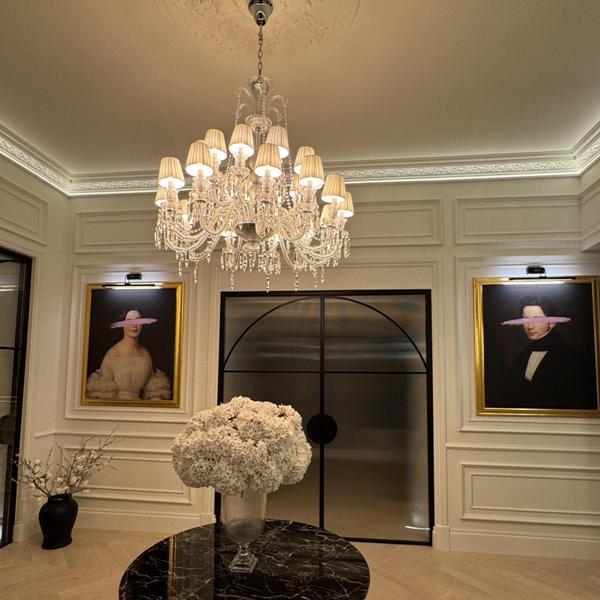
7. Treating every chandelier and finish in the same way
A crystal chandelier, an antique brass fitting and a contemporary glass design may all require completely different cleaning methods. Using the same product and technique across every surface can lead to spotting, tarnishing or damage to protective coatings.
The environment also matters. Direct sunlight, high humidity, cooking residue and building work can all affect how and when a chandelier should be cleaned.
The professional fix
Begin by identifying the chandelier’s materials and construction.
Crystal and glass require gentle handling, careful drying and protection from fingerprints. Removable pieces may sometimes be cleaned with a mild solution, but delicate or treated glass should be checked first.
Brass and antique metalwork may need light cleaning rather than aggressive polishing. A natural patina can form part of an antique chandelier’s character and value.
Chrome, nickel and modern finishes should be cleaned with non-abrasive materials and dried promptly to preserve their sheen.
Murano glass and bespoke components require particularly careful handling because their shape, finish and construction may be unique.
For more detailed general guidance, the Lamps Plus chandelier-cleaning guide also recommends planning the process, protecting the area below and avoiding rotation of the fixture.
When to call a professional chandelier cleaner
DIY dusting may be suitable for a low-level fixture in good condition. Professional help is the safer choice when the chandelier is:
- Installed at significant height
- Large, heavy or difficult to access
- Antique, fragile or highly intricate
- Made from crystal, Murano glass or delicate metalwork
- Showing loose crystals, damaged wiring or movement
- Located above stairs, tables or valuable furnishings
- Due for deep cleaning after renovation work
A specialist team can assess the fixture, isolate risks, protect the surrounding space and select cleaning methods according to its materials and condition. Professional handling also provides an opportunity to identify loose connections, deteriorating wiring or early signs of damage.
Our specialist chandelier services include careful on-site cleaning, maintenance, metal finish polishing, repair and rewiring support for residential and commercial properties.

Preserve the brilliance with the right care
The best chandelier-cleaning results come from patience, suitable materials and careful preparation. Avoiding these seven mistakes helps protect the finish, structure and longevity of the fixture while keeping its light clear and brilliant.
For valuable, high-level or delicate chandeliers, professional cleaning offers a controlled and reassuring solution. Contact Chandelier Specialist Services to discuss tailored cleaning, maintenance and preservation support.